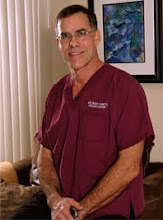
Do you know what TUBA is? No, not the musical instrument. It’s actually a kind of cosmetic surgery. TUBA stands for Trans-Umbilical Breast Augmentation. This surgery actually puts in the breast implants through an incision in the belly button (also called the umbilicus). This way, there is no scar in and around the breast after the breast augmentation surgery. This surgery is favored by Dr. Yoho for its safety, speed, accuracy, and for the no-scar results. Well, to be specific, there is a scar, but it’s inside the belly button-not an area that most patients worry about. Dr. Yoho has successfully performed TUBA method surgery thousands of times.
Transumbilical breast augmentation has many advantages over standard approaches for the right patient. Patients experience less downtime and need less post-operative care. So who is the right patient? Good candidates desire larger breast or need breast reconstruction. Good candidates for TUBA also do not want or need a breast lift in addition to breast augmentation, and have good skin elasticity (relatively tight skin). Finally, as with other surgeries, candidates should be in good physical and mental condition (no active diseases, disorders, or mental instabilities).
So, how can breast implants be placed through the navel?
If you were to have TUBA surgery, you would probably be on the operating table for less than an hour. In fact, typical transumbilical breast augmentation takes as little as 20 to 30 minutes. You could have either general anesthetic (which knocks you out), or local anesthesia with IV sedation. Dr. Yoho has long used this special light sedation method to reduce patient side effects from anesthesia. Although the patient is awake during surgery, they are given relaxation medicine and usually don’t remember anything.
But we’re getting ahead of ourselves. The first step would be a consultation to evaluate you as a candidate. Then you would decide on the size of your implants. You will try on some different outfits with bra implants to see how you feel with different sizes. Dr. Yoho will also help you to evaluate sizes in terms of your body frame and current breast shape and size. When you go in on the day of surgery, you will once again talk to Dr. Yoho about the implant sizing, and he will mark your body in preparation for the surgery. The lines that cosmetic surgeons draw on patients’ bodies are like a diagram for the operation, partly because bodies look different lying down than standing up. In the case of TUBA, the lines show where the tunnels will go from your belly button to your breasts. You will then be taken to the operating room.
You will be sedated and prepped for surgery. You will receive local anesthetic around the breasts and around your belly button area that will help reduce soreness in post-op and reduce bleeding during surgery. Then, the actual incision is made in your navel. Dr. Yoho carefully separates the tissues around the navel, which helps to prevent the formation of scar tissue. Dr. Yoho thinks that this is one of the advantages of his extensive experience: doctors with less experience might not do this.
Next, a device is threaded inside the incision that creates a tunnel between the navel and each breast. These tunnels are done with a blunt device and not with a knife. In other words, there is no cutting or slicing of tissue in the tunneling procedure. Pockets are also created in the breast area to hold the implant. Dr. Yoho will consult with you before the procedure about his placement (under or over the muscle) of your breast implants.
Next, a tube is run up to the breast with a balloon-expander device. This is inflated until the tissue is taught so that the pressure slows or stops the bleeding, and also finishes the space inside so that the implant will rest easily and naturally after surgery.
Next week: part 2.
Tuesday, August 14, 2012

Saturday, August 11, 2012
Discount on Injectable Fillers
Now, with a Gilt City deal, you can get a voucher worth $100 toward a 1 mL treatment with Restylane or a related product for $49. Limit 3. Or for $149, you can purchase a $300-off voucher toward a 2mL treatment. Los Angeles cosmetic surgeon Dr. Robert Yoho is participating in this Gilt City deal. His full service surgical center in Pasadena also houses a medical spa with highly trained and experienced technicians. The offer must be used by the end of September (see terms and restrictions on the Gilt City page), so make your appointment now.
Restylane is a kind of filler that is made of hyaluronic acid. If that sounds scary, don’t worry—hyaluronic acid mimics a natural bodily chemical. It is also mixed with a small amount of a local anesthetic called lidocaine. The injections are usually easily tolerable—some people report a virtually painless experience. After the injection, there is very little in the way of downtime or recovery. You might see a little redness, but you should be able to resume normal activities very quickly. This treatment is very well-tolerated.
Another advantage is the soft, natural appearance of the fillers. Restylane stays soft under the skin, so that the injectable doesn’t result in lumps or stiffness. It is also longer-lasting than older fillers. Restylane can last a year or longer. Dr. Yoho and his staff have found that, by using a little extra filler, the effect can last for up to two years.
These fillers are used to plump up moderate to severe folds and wrinkles. They are commonly used around the mouth, but are also sometimes used to plump up the cheeks or even to fill in brow wrinkles. Dr. Yoho and his staff have obtained excellent results with these fillers. If you are worrying about facial lines making you look older, call our Pasadena office for your appointment and get your discount voucher.
Restylane is a kind of filler that is made of hyaluronic acid. If that sounds scary, don’t worry—hyaluronic acid mimics a natural bodily chemical. It is also mixed with a small amount of a local anesthetic called lidocaine. The injections are usually easily tolerable—some people report a virtually painless experience. After the injection, there is very little in the way of downtime or recovery. You might see a little redness, but you should be able to resume normal activities very quickly. This treatment is very well-tolerated.
Another advantage is the soft, natural appearance of the fillers. Restylane stays soft under the skin, so that the injectable doesn’t result in lumps or stiffness. It is also longer-lasting than older fillers. Restylane can last a year or longer. Dr. Yoho and his staff have found that, by using a little extra filler, the effect can last for up to two years.
These fillers are used to plump up moderate to severe folds and wrinkles. They are commonly used around the mouth, but are also sometimes used to plump up the cheeks or even to fill in brow wrinkles. Dr. Yoho and his staff have obtained excellent results with these fillers. If you are worrying about facial lines making you look older, call our Pasadena office for your appointment and get your discount voucher.
Friday, July 20, 2012
How to Approach Your Breast Sizing For Your New Implants
Do not focus on the exact implant size! Instead, put the sizer implant in a bra and see how it looks on you…
Everything depends on how you look with the given style and shape and size of your implants. The “high profile” implants should be tried and compared with the other styles. Do not look at the “before and after” pictures, as they are irrelevant. Examine how you feel with the different looks and the different implants. Take home the sizer implants if possible and try them on with different bras (Dr. Yoho’s office offers this). Your surgeon will help you with what’s reasonable for your body style, chest size and breast characteristics. Listen carefully to all the information available at the office; there are important aesthetic and health issues involved.
Dr. Yoho likes under-the-muscle implants for many cases in which the patient has substantial breast tissue. These often look absolutely fabulous right after the procedure, and can’t get “hung up” under the muscle and “ride high.” When the breasts aren’t too saggy, inserting the implants through the armpit is a very nice approach which can give very satisfying results. With the “under the muscle” approach, however, you do risk eventual implant displacement and movement, and the procedure requires eliminating the lower part of the chest or “pectoralis” muscle during the surgery. But if there’s very little breast tissue, the implant should generally go under the muscle, using the “through the belly button technique” which works nicely for many patients. These are all big decisions to make, and the patient should read as much as she can and learn as much as possible from the surgeon in order to obtain the best result.
Everything depends on how you look with the given style and shape and size of your implants. The “high profile” implants should be tried and compared with the other styles. Do not look at the “before and after” pictures, as they are irrelevant. Examine how you feel with the different looks and the different implants. Take home the sizer implants if possible and try them on with different bras (Dr. Yoho’s office offers this). Your surgeon will help you with what’s reasonable for your body style, chest size and breast characteristics. Listen carefully to all the information available at the office; there are important aesthetic and health issues involved.
Dr. Yoho likes under-the-muscle implants for many cases in which the patient has substantial breast tissue. These often look absolutely fabulous right after the procedure, and can’t get “hung up” under the muscle and “ride high.” When the breasts aren’t too saggy, inserting the implants through the armpit is a very nice approach which can give very satisfying results. With the “under the muscle” approach, however, you do risk eventual implant displacement and movement, and the procedure requires eliminating the lower part of the chest or “pectoralis” muscle during the surgery. But if there’s very little breast tissue, the implant should generally go under the muscle, using the “through the belly button technique” which works nicely for many patients. These are all big decisions to make, and the patient should read as much as she can and learn as much as possible from the surgeon in order to obtain the best result.
Wednesday, July 18, 2012
About Face Lifts For Men
The potential for a man to get a really tight facelift is not quite as good as a woman's. The complication rate is somewhat higher, because there are more blood vessels. For this reason, male facelifts have to be carefully picked and chosen to be sure that the result will be worth the expense, the hassle and the risk of complication. There are many Hollywood stars who have attempted to get very tight skin underneath their chin through the use of facelifts, but success in this area is difficult. There is always a little bit of loose skin down there even after the tightest of facelifts, because this area tends to loosen up over a relatively short time. Additionally, bleeding is much more common, as men seem to have a difficult time sitting still and letting the healing process occur for the first day or two, so we see blood underneath the skin that has to be taken out on the next day or the day after. Relatively thin-skinned Caucasian women whose face can be lifted without the examining physician making incisions are probably the best candidates for a facelift.
All this aside, if performed with the right accompanying procedures, such as cheek or chin implants or peels, male facelifts can be satisfying. Men just have to know the limits and the likelihood of problems and be counseled appropriately. We have seen exceedingly dramatic results with facial implants alone, which can be a good option to consider – having an implant procedure without actually lifting the face. Of course, this isn’t practical in an older man who has a lot of loose skin or a lot of sun damage. In these cases, the skin should be improved with the usual technique of pulling it back and trimming the skin around the ears.
All this aside, if performed with the right accompanying procedures, such as cheek or chin implants or peels, male facelifts can be satisfying. Men just have to know the limits and the likelihood of problems and be counseled appropriately. We have seen exceedingly dramatic results with facial implants alone, which can be a good option to consider – having an implant procedure without actually lifting the face. Of course, this isn’t practical in an older man who has a lot of loose skin or a lot of sun damage. In these cases, the skin should be improved with the usual technique of pulling it back and trimming the skin around the ears.
One advantage that men have in facelifts is that their beards allow the lifting of the skin without concern about changing the sideburn area. In women, sometimes the scar must go in front of the sideburn or else the little tuft of hair in front of the ear gets lifted too high. In men, this scar can almost universally be hidden within the scalp behind the sideburn and above the sideburn, so this is one advantage of male facelifts. Occasionally men will complain of hair growing over the little bit of cartilage that sticks out from the middle of the front of the ear, the Tragus. This can be treated with laser hair removal, and sometimes the hair seems to fall out on its own and not be as active around a year or 18 months after the facelift.
All in all, as in every cosmetic procedure, the physician and the patient must work together to individualize treatment, in order to obtain the best result.
All in all, as in every cosmetic procedure, the physician and the patient must work together to individualize treatment, in order to obtain the best result.
Saturday, July 14, 2012
Big Buttocks Are In Fashion
Cosmetic surgeons keep hearing about weekend house parties where unknown substances are injected into buttocks. We also hear stories from hospitals and other physicians that, due to this practice, terrible problems with chronic infection have occurred.
There is much speculation about what is being injected. Some think people may be buying breast implants, and injecting the silicone from them into the buttocks with no sterilization. Unfortunately, the silicone in breast implants is a thicker silicone and has a high risk of infection when injected into human tissue in large quantities. To be used safely, this type of silicone needs to be encased in the capsule that surrounds a silicone implant. We have seen several cases of people who had large, firm, tender, red buttocks that looked very unnatural, and were apparently injected with some sort of foreign substance. I was concerned that if I biopsied the area, the whole buttock area would become infected.
There are other injected filler substances that, while legal in other countries, have caused a lot of infection and inflammation in many patients. When the patient shows up in the U.S., we have to deal with it. In some cases, these foreign doctors don’t even document what they are actually using, perhaps because they suspect that the sort of permanent filler they’re administering is really a magnet for infection. We have seen some of these cases in our clinic. They are not easy to treat.
Buttock implantation is also being performed using firm implants that are designed for this purpose. However, the ones I’ve seen look unnatural. The top part of the buttocks often sticks out, and the implant does not adequately support the bottom buttock. It may be painful to sit on and may come through the skin by itself. Additionally, it needs a large opening for placement which ends up leaving a significant scar.
My experience and opinion is that the only reasonable way to improve buttock shape, contour and size is fat transplantation. We do this nearly every week at New Body Cosmetic Surgery and we have many, many happy and satisfied patients. Complications are rare. The procedure can be repeated more than once at intervals of 3 to 4 months. Just the right amount of fat should be transplanted, for if too much fat is placed, infection and other problems are more likely to occur. The buttock size and shape can progressively be improved. And liposuction in the areas around the buttock—the outer thighs and hips—also helps the appearance of the buttocks. If the patient gains back a little bit of the fat that was suctioned away after the procedure, the fat may go to “desired” places like breasts and buttocks, and the overall shape may be enhanced.
Thursday, July 12, 2012
Cosmetic Surgery 2.0

On the Internet, there is a saying that the new Internet is version 2.0. We like to think that our cosmetic surgery is version 2.0. Shorter recovery times, simpler procedures, more natural results, and overall safety improvements are what we strive for and what the latest technology promises. We are doing our best every year to bring you a superior experience and better results with the latest techniques in surgery and recovery. See DrYoho.com or look at the affiliated websites to which Dr. Yoho contributes numerous blog posts, which can be found by googling “Dr. Yoho.”
_______________________
Robert Yoho, M.D.
Robert Yoho, M.D.
Did You Know That All of Our Surgeries Can Be Done Awake?
If you have special fears of anesthetic, we can perform your surgery under local anesthesia, even a tummy tuck. We do give some oral medicines and perhaps a shot prior to the main event, to be sure that you’re nice and relaxed and not afraid. However, the local anesthetic does the trick for the pain relief, and you can watch the whole thing.
We have successfully performed breast augmentations, liposuctions, tummy tucks, facelifts, and eyelid procedures all under pure local anesthetic technique. If fear of general anesthetic is your issue, please be sure to ask us about this possibility.
While we’re able to do the above, we generally feel that a little intravenous sedation is appropriate for most patients and they usually do respond very well without any nausea or other discomfort. We can keep you comfortable and unaware of your surroundings without using all the drugs and so on that make general anesthetic such an uncomfortable and possibly hazardous experience. Ask us about our anesthetic techniques when you come in for your consultation.
While we’re able to do the above, we generally feel that a little intravenous sedation is appropriate for most patients and they usually do respond very well without any nausea or other discomfort. We can keep you comfortable and unaware of your surroundings without using all the drugs and so on that make general anesthetic such an uncomfortable and possibly hazardous experience. Ask us about our anesthetic techniques when you come in for your consultation.
Tuesday, July 10, 2012
Some Notes in Regard to Tummy Tuck Surgery

Tummy tuck, or abdominoplasty, is a surgery that has some pluses and some minuses. When compared to liposuction, on the plus side there is a tightness of the front of the tummy skin, and the surgeon is able to sometimes tighten the muscles underneath. After pregnancy, these muscles pull apart in a fashion that is sort of like felt. Felt would not shrink back or “rubber band” back into its original state, but instead stays loose. When the tummy tuck is performed, the muscles in the middle of the “six pack” can be laced together with permanent sutures, and therefore the pulled-apart middle can sometimes be repaired. On the other hand, if there is a great deal of fat underneath the muscle surrounding the stomach and other internal organs, it doesn’t work very well because it’s sort of like suturing a drum head.
The downsides of tummy tuck are as follows:
1. It’s quite a dangerous operation compared to anything else in cosmetic surgery. The fatality rate (death rate) is approximately 1 in 3000.
2. You end up with a huge (about two-and-a-half-feet long) scar.
3. The belly buttons postsurgery are often a bit unnatural or very unnatural looking.
4. Liposuction at the same time is not usually regarded as safe. The reason for this is that the blood vessels that supply the area of the abdominal skin that’s to be pulled town to meet the pubic bone can be easily compromised by liposuction, and so liposuction is usually done on another occasion many months separated from the tummy tuck.
5. Liposuction if done instead of the tummy tuck can often produce a great deal of skin shrinkage and a very satisfactory result, and a recovery which is very, very minimal compared to a tummy tuck, which generally has a painful and prolonged recovery.
Remember when thinking about your alternatives between tummy tuck and liposuction it’s not a clear “yes” and “no” answer in most cases. Tummy tucks are not for everyone, because of the risks, deformity of the scarring, and other factors. Think carefully about these issues, and although the risks associated with liposuction are modest, they are still a factor too. Use your best judgment and your doctor’s advice in regard to these issues.
Subscribe to:
Posts (Atom)